Pelvic Overlap Spectrum Syndrome
Looking Beyond a Single Diagnosis
Have you ever been told your hypermobility and endometriosis symptoms are “unrelated”?
Maybe you’ve seen multiple specialists—for pelvic pain, bladder issues, hypermobility, constipation, painful intercourse, low back pain, vocal problems, or nervous system dysfunction—yet no one has explained how they might fit together.
For many people, they do.
The Pelvic Overlap Spectrum Syndrome (POSS) recognizes that chronic pelvic pain and pelvic health concerns often involve multiple body systems rather than a single condition. Instead of treating symptoms in isolation, POSS encourages a whole-body approach that looks for the connections between the musculoskeletal, nervous, connective tissue, gastrointestinal, urologic, gynecologic, respiratory, and even vocal systems.
What Is the Pelvic Overlap Spectrum?
The Pelvic Overlap Spectrum is a framework developed to help explain why so many people experience overlapping pelvic health conditions. See the figure at right, used with kind permission from ESSI (Endometriosis Surgical Specialists International.
Rather than asking, “Which diagnosis do you have?” the Pelvic Overlap Spectrum asks:
- How are your symptoms connected?
- Which body systems are contributing?
- What is driving your pain or dysfunction?
For some people, endometriosis may be one piece of the puzzle. For others, hypermobility, connective tissue disorders, bladder dysfunction, bowel dysfunction, persistent pain, breathing pattern disorders, or nervous system dysregulation may be the primary drivers.
Understanding these relationships allows for more individualized, effective care.
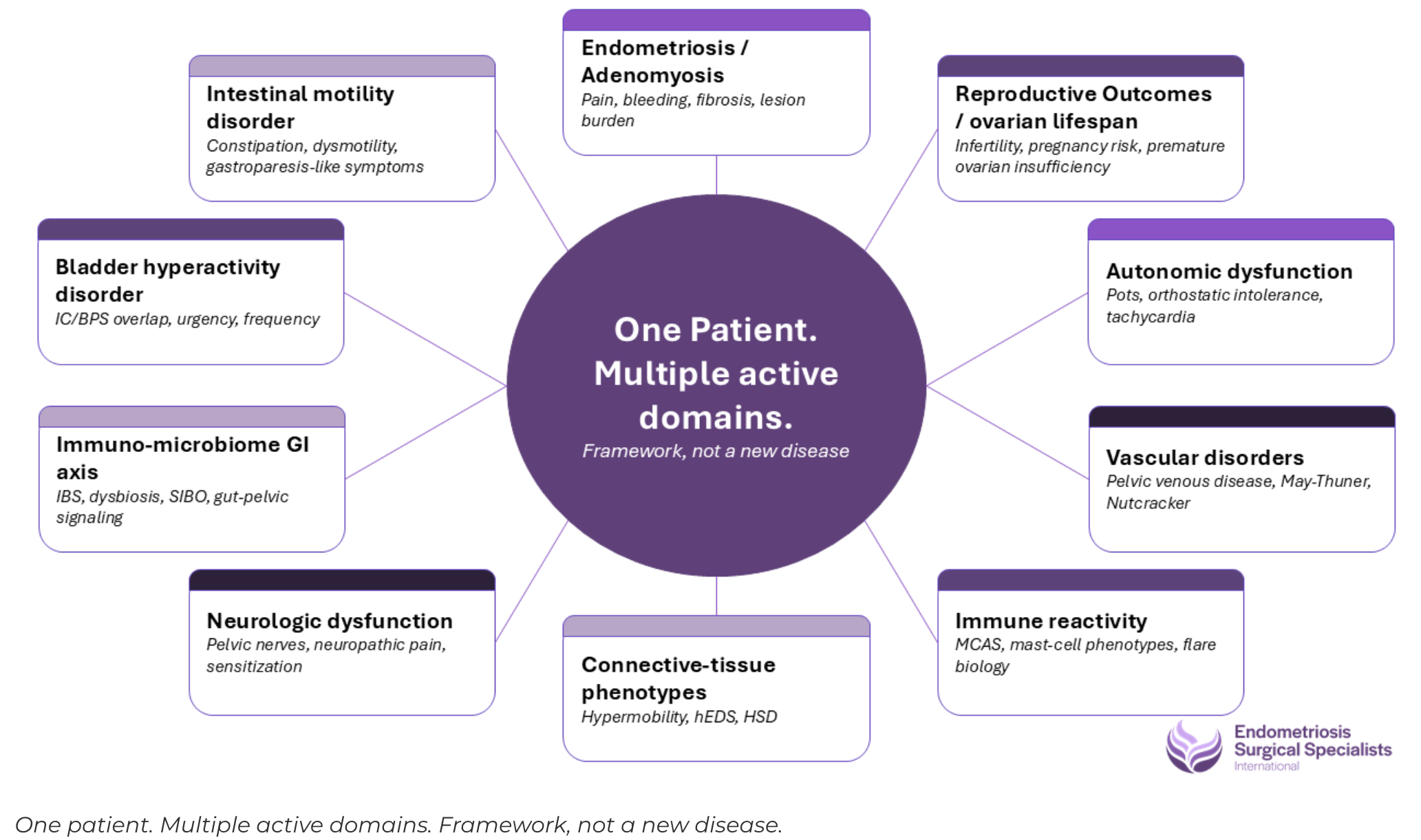
What Is the Pelvic Overlap Spectrum?
The Pelvic Overlap Spectrum is a framework developed to help explain why so many people experience overlapping pelvic health conditions.
Rather than asking, “Which diagnosis do you have?” the Pelvic Overlap Spectrum asks:
- How are your symptoms connected?
- Which body systems are contributing?
- What is driving your pain or dysfunction?
For some people, endometriosis may be one piece of the puzzle. For others, hypermobility, connective tissue disorders, bladder dysfunction, bowel dysfunction, persistent pain, breathing pattern disorders, or nervous system dysregulation may be the primary drivers.
Understanding these relationships allows for more individualized, effective care.
Why We Take a Whole-Body Approach
At GPH, we don’t just treat a diagnosis—we evaluate how your entire body is functioning.
Your evaluation may include looking at:
- Movement and biomechanics
- Pelvic floor function
- Breathing patterns
- Core and diaphragm coordination
- Hip and spine mobility
- Connective tissue and hypermobility
- Nervous system regulation
- Voice-to-pelvic floor relationships, including jaw function
- Lifestyle factors that influence recovery
- Labs that influence all of these factors
This comprehensive approach helps us identify contributing factors that are often overlooked in traditional, diagnosis-based care.
Is This Approach Right for You?
You may benefit from a Pelvic Overlap Spectrum evaluation if:
- You’ve seen multiple providers but still don’t have answers.
- You have several diagnoses that seem unrelated.
- Your symptoms have persisted despite treatment.
- You suspect hypermobility or connective tissue dysfunction is affecting your pelvic health.
- Your pelvic symptoms change with stress, activity, breathing, or whole-body movement.
- You want a clinician who looks beyond a single diagnosis.
You do not need an endometriosis or EDS diagnosis to benefit from this approach.
Learn More
The concept of the Pelvic Overlap Spectrum was developed to better understand the complexity of chronic pelvic pain and overlapping pelvic health conditions.
Read more in the International Endometriosis Summit article: Pelvic Overlap Spectrum: Understanding Complex Pelvic Pain
Ready to Get Started?
If you’ve been searching for answers and feel like your symptoms don’t fit neatly into one diagnosis, we’d love to help.
Our goal is to understand the full picture—not just one body part—so we can develop a personalized treatment plan that addresses the root contributors to your symptoms.