From Struggle to Summit – Post 8 (Month 18)
Guest Post by Dr. Caroline Withall
December 15th, 2025 – the day I made it to the top of the world
That’s what it felt like to me, standing atop of the Hintertux glacier in Austria. It was a very emotional moment, over six years since I had been able to go up a mountain. I was never a skier, but I always enjoyed being in the mountains for the crisp white snow contrasting with electric blue sky creating that glorious calm grounded feeling you get when you experience the power of nature in all its grandeur. Even a year ago, the idea that I would be able to take three cable cars and walk on snow was inconceivable.
An Update on My Rehabilitation Journey
It’s been a long time, around 18 months, since I last wrote a blog update about my recovery. Initially I attempted to review the various trips and programs since then, but I realised that one of the things that this process has taught me is that everybody’s body is unique. No patient will have exactly the same “prescription” for recovery, so rather than consider the minutia of my care, I feel it is better to give an overview of where I am now, and what I have achieved since then, which will give a good sense of my progression.
Addressing Scar Tissue, Fascia, and Post-Surgical Restrictions
I made a further three intensive trips to Dr. Ginger, and what particularly stands out for me is that every single time I unequivocally benefited from having expert, targeted dry needling. I genuinely believe that without this I would not have been able to “undo” quite severe scar tissue and fascial restrictions that resulted from multiple hip arthroscopies. Time and time again, I read about hip arthroscopy rehabilitation being about regaining strength. I don’t dispute that, of course that is important. What is essential though, is a) finding a method of doing this that does not aggravate your issues and b) addressing equally crucial issues such as fascial restrictions and scar tissue that can seriously impact your ability to move freely.
Pelvic Floor Rehabilitation and Rebuilding Strength Safely
There’s no question that building up glute strength has been an essential component of my progress. However, like many others, I found that no matter how hard I tried, I could not do that with traditional physiotherapy exercises – they made matters worse and caused terrible pain flares. It took a long time to realise that this was linked to issues with pelvic floor muscles. Dr. Ginger has been a vocal advocate that hip arthroscopy rehab protocols should include considering the impact of the surgery on the pelvis and take into account those muscles too, not just the hip. When you consider your hip is placed in traction, it is not difficult to see that might affect the wider pelvic area too. Yet this issue is still largely under the radar and rarely addressed. I have only been able to successfully strengthen once it was addressed for me, and using a pilates reformer has been transformational.
If you have pelvic floor issues, pilates can be problematic. If I just went to a general class, I suspect I would struggle with worsening pain. However, if you get instruction in the right exercises and techniques, with adaptations for your specific issues, it is absolutely possible to strengthen slowly and carefully and climb out of the hole. This is because the reformer supports your body weight, allowing for targeted concentration on the strength building aspect, compared to a set of traditional squats which would cause days of pain post training. It is surprising how fast this transformation can be once you find the right routine. Within 3 months of starting I had less glute pain, less nerve pain resulting from that and increased ability in walking. As well as symptoms improving, at my next intensive trip I saw for myself with ultrasound imaging how my glute med muscle mass had increased as a direct result of doing the reformer exercises.
Using Ultrasound Imaging to Guide Recovery
The use of ultrasound imaging is another very valuable part of Dr. Ginger’s practice, and links back to my second, extremely important point above. Alongside the strengthening work it is imperative to address fascial and scar tissue restrictions. As well as seeing for myself the pleasing result of my hard work in terms of improved muscle mass, I could also clearly see where there were fascial compressions – a series of wavy, jaggedy lines on screen, rather than nice and smooth. We were able to identify that I have a nasty restriction on my right glute med, rather uniquely in sitting (hence why driving, sitting etc have been painful) – yet it is fine in standing and lying! This forensic level of detail was considered by Dr. Ginger and factored into my rehab program, with her developing ways to tackle this not only with dry needling, but also at home exercises and interventions, such as regular cupping.
Ultrasound and myofascial assessment also helped to identify areas of scar tissue, far beyond the hip scope scars. I had no idea that both an abdominal scar from my teens and a c-section scar were contributing to my pain patterns. This was a lot of highly skilled complex work from Dr. Ginger, piecing together how the restrictions were impacting my body; as she says, scars “have a way of finding each other and creating a web of restriction”. Needling, cupping and myofascial work addressed this – I think I broke the record for the patient with the most amount of needles in at any one time!
Retraining the Nervous System After Surgery
The other area that is less discussed about recovering from surgeries is the reprogramming of neural networks. This is SO hard to get your head round, and even harder to overcome. I am still working on this! The body is clever and makes adaptations to help you survive. Even when the problem is corrected by surgery, the brain does not necessarily realise this, hence why old pain patterns can persist. Here I found the use of E-Stim very effective, although I will admit it does require a lot of trust in your practitioner to allow them to hook up electrical current to the dry needles to essentially shock the specific muscle back into firing in the correct manner. Luckily I was in good hands with Dr. Ginger! I found that only one session was needed for several muscle groups that were misfiring, such as the paraspinals and the multifidi. I was able to follow this up with at home work, in order not to lose the gain – for example, for the paraspinals, the yoga pose Locust is excellent, and I still practice this several times a week as part of my maintenance routines.
Nervous System Regulation, Mind-Body Work, and Long-Term Healing
Tackling fascia and scar problems was not restricted to manual work. This is where you really have to take ownership of your recovery and consider wider aspects that are impacting it, most notably your nervous system. If you have arrived at Dr. Ginger’s office for some intensive care, it’s not unreasonable of me to assume that you have probably had a long and difficult journey up until that point. She will be the first to tell you that the vagus nerve is not just social media hype, it really is a component of health and recovery. Unless you address what has happened to you thus far and work towards settling down your shot nervous system, you are unlikely to make big gains. Do not underestimate how much your mind affects what is going on in your body. That is in no way suggesting that things are in your head – far from it. I have worked extensively on this aspect and can attest to the fact that tension in your nervous system, essentially stored trauma, really does manifest itself physically in the form of fascial compressions. If you can unlock that tension it can be a game changer. How you choose to do this is very individual, but I found great success with hypnotherapy, reiki and a specific mind/body pelvic health course. It has been a LOT of hard work; it takes a while for these things to sink in and click…but then you begin to notice that you are improving, it creeps up on you. This is not a quick fix, and the tools and tricks I have learned are imperative to keep up as part of my maintenance routines.
Living With Maintenance, Progress, and Acceptance
I have mentioned these maintenance routines a few times now. There’s no doubt that things I have learned are now part of a lifelong commitment to keeping up my gains. Rehabilitation has been all-encompassing, and at times really mentally exhausting because it does require absolute dedication and discipline to both the mind and body. I’m extremely fortunate and privileged to be in a position where I was able to devote my time and resources wholeheartedly to it, as not everybody can have that opportunity. There have been highs and lows, but the stronger I get, the easier I manage flare ups. Often they coincide with pushing the boundaries and with an increase in activity there can be a temporary slide – this is where the mental work is of such importance, to keep you strong in those situations. You will always have times when you feel “why me” and frustration that you have to live your life keeping on top of your body’s quirks – but if you put in the mind work, I promise you that you do get much better at being in the present, and not being as distressed by a flare. You just knuckle down and work through it.
In attending Dr. Ginger’s clinic, I was fortunate to find somebody who understood my unique problems and developed evolving programs of recovery, and worked out adaptations for me. We are often told things are “good” for you – the headline of yoga or pilates for a New Year, New You for example. The truth of the matter is they’re possibly not good for you if you have hip or pelvic issues, and that’s where proper assessment of your body and what it needs is crucial. Once you have that, and you have your program, it is possible to progress. You begin to understand yourself, becoming skilled in recognising for yourself what works. A deep lunge is never going to be right for my type of hip sockets! I am delighted though to be able to practise some gentle hip safe yoga again, returning to an activity I loved pre-op. I believe that the work I did with other practitioners to complement my rehab program from Dr. Ginger played a pivotal role in the success of our sessions too – for example, the body awareness I have developed from having reiki muscular sessions, and the knowledge gained from studying the mind/pelvic health connection helped me articulate precisely where I was having pain, which really honed our sessions – intensive work is carried out over a few short days so the better prepared you are, the more you will gain from the visit. As Dr. Ginger says “it takes a village”!
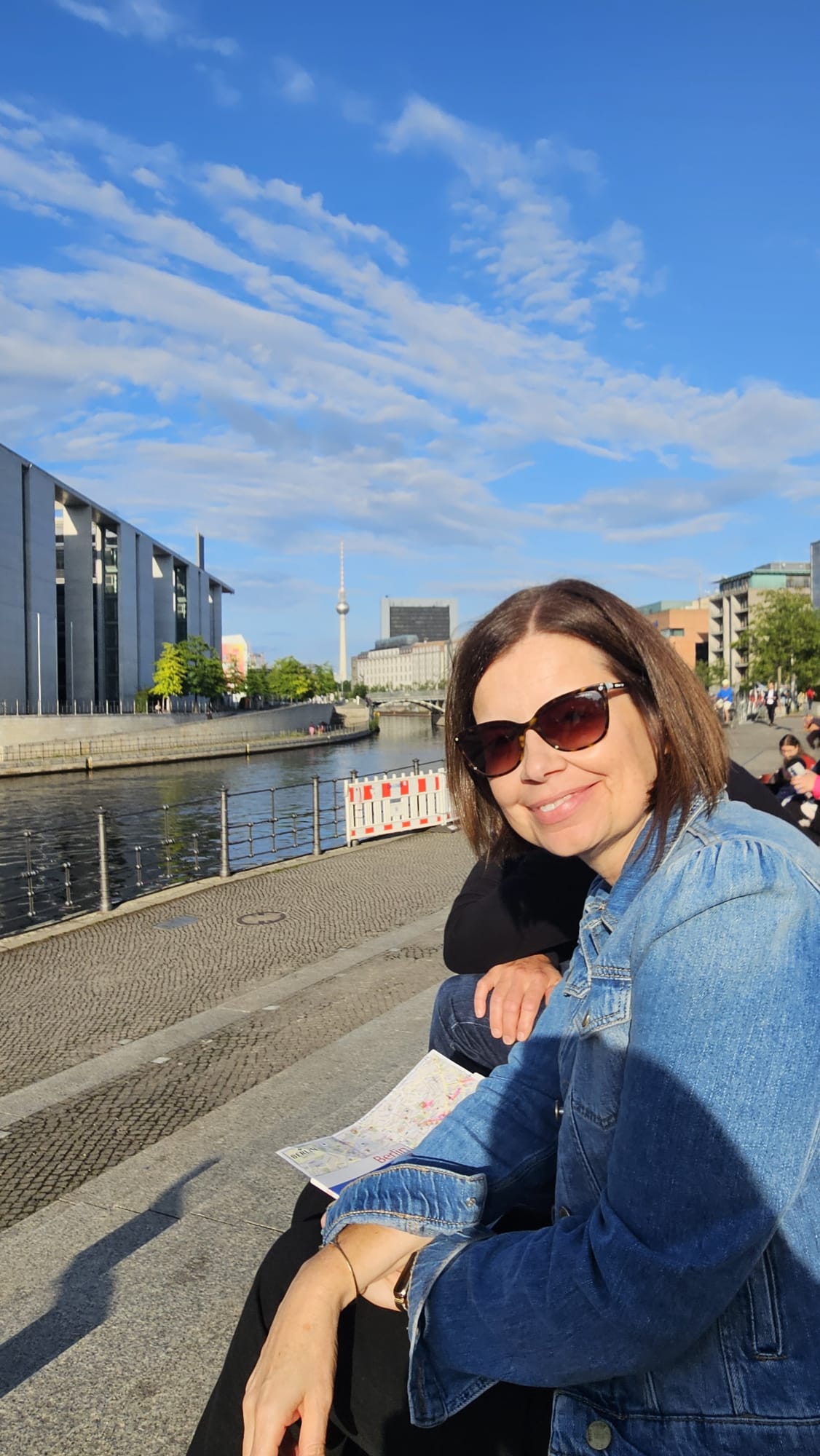
Writing this blog now, it’s incredible to reflect that since my last one, I have travelled to Barcelona, Berlin, Paris as well as the mountains of Austria. I honestly didn’t believe it would be possible to go on family holidays again. That’s not to say these trips were easy and pain-free. It involved a lot of tenacity on my part, and using my toolbox to push through, keeping calm when faced with trials (like navigating skiers as you walk between cable cars!) and carefully planning rest and recovery time, and where might have good seats to sit and eat (more on this later). My limitations are stopping me less now – the trade off of the grind of near daily maintenance and on-going progression work results in experiencing more of life. It is still very hard at times; I still get nasty flare-ups when I have pushed myself too hard, which can be very frustrating and frankly spirit crushing. I get fed up of having to plan a lot to ensure the best chance of success. I miss being able to do activities that really help you get out of your head. I was a big dancer, and I would be lying if I said it wasn’t tough not to be able to do this. On the flip side, I have become really good at meditation! You just have to keep reminding yourself how far you have come. I will keep working to gently improve my tolerance window for doing things – right now I can go to a short gig and have a bit of a sway! I still have everyday challenges, the biggest being sitting for long periods of time, which people find difficult to comprehend and can make things tricky socially. Relative to where I was previously though, I can now drive comfortably for about an hour and half with a short stop; I can meet a friend in a restaurant (with a good seat, not squishy!) for about one and a half, two hours. That’s way up from 10 mins and having to take a special cushion with me, which is how I was when I first went to see Dr. Ginger. In truth, it’s probably not good for anyone to be sitting for hours at a time anyway, but long theatre shows are still not for me and I’m not sure they ever will be.
I keep working at things, I keep chipping away. At the time of my last blog, rehabilitation was my life – full stop. Now, it’s still an integral and essential part of my life but I’m moving away from it solely defining me and dominating my thinking 24/7 – I’ve got it down to about half that now!! There is still more work I can do and progress to be made, but I am more measured in doing this, it forms part of my maintenance work, and I now have time to consider other pleasures in life, which actually helps – focussing solely on your issues can be very draining. Finding a better balance indicates real progress.
My actual hip issues have largely been resolved, thanks to the program and Pilates reformer strengthening. I am still dealing with residual pelvic floor problems, which are really tricky to overcome, mainly excess tension causing muscular pain. The pelvic floor is definitely my Achilles heel in terms of stress – some people may get a headache, but when I am faced with something stressful, it definitely goes to my pelvis. But now I know this! Understanding what is happening is half the battle, and I’m aware of it, and consequently have got good at mitigating it with the mind/body tools, as well as physical soothers such as nerve flossing in the Pigeon yoga pose – a life saver when I get a pesky obturator nerve flare!
I’m not at the end of the rehab process. I will never get to “the end” or “get better” per se – I have borderline hip dysplasia that no amount of rehab can “fix”. Accepting that has in itself lead to progress. I am someone who has a health issue that I manage, and try to improve, just as anyone else my age with a health ailment might. I’m really not that unique! I am really proud of myself for having tenacity, the fight and the curiosity to keep going, keep asking questions, and keep pursuing options; at one point, it looked as though I would never walk comfortably again. This process has made me realise I am really strong mentally. I’ve learnt so much about myself, and my own body. If you can develop body awareness, that will help you in your journey as YOU become the expert in your own body and how to manage it. I would say that I am living life now at about 75% of what I did before, and I will never stop working to improve that. I hope to dance a little and conquer uneven ground eventually!
I don’t know what the future holds for me. I don’t know how long my hip repairs will hold out or whether I will eventually have to have hip replacements. My hope is that I do not have to have surgery again. With gentle, consistent strengthening, continuing to expand my reformer work, such as starting to use the trampoline attachment to introduce the idea of impact back to my body, regular maintenance and continued study and practice of mind/body methods I hope in another year to have made just as much progress as I have the last eighteen months. Obviously I would have preferred not to have had to go through this experience, but objectively it has shaped who I am going forward and highlighted the inner strength I possess. As well as the great professional support I eventually found, I also could not have achieved everything I have without the consistent love, care and encouragement from my husband and daughter, and wider family and friends. It means the world to me that I am now able to do more things with them again, and I will continue to strive to expand that because enjoying experiences together is what makes me feel complete again.
I would like to thank the following:
- Professor Andy Langdown, for putting me back together again after a failed previous surgery.
- Victoria Smith specialist hip physiotherapist, for setting me on a better path after that first surgery, and for helping me figure out the path forward after further surgeries.
- Sinsook Park acupuncturist for caring for me in my darkest days by managing my pain and keeping my spirits up.
- Hattie Barden at Rushymead Counselling, Hypnotherapy and Support for helping me make sense of what has happened, and enabling the ability to move forward.
- Kirsty Pacey at Sacred Reiki for her invaluable and magical work on my spiritual health and specific muscular sessions that really helped pinpoint the problem areas.
- Dr. Brianne Grogan for her amazing Mind Body Pelvic Health Academy course, which I found really transformative for managing my nervous system and releasing muscular tension.
- And of course – Dr. Ginger – for her skills, patience, tenacity, knowledge, intellect, empathy and unwavering support.

At the top of the Hintetux Glacier. On the banks of the Spree in Berlin. Snow walking back to the cable car. Well earned reward for mountain adventures!


